AI in Audit: Why Trust Fell as Adoption Rose
PUBLISHED
August 4, 2026
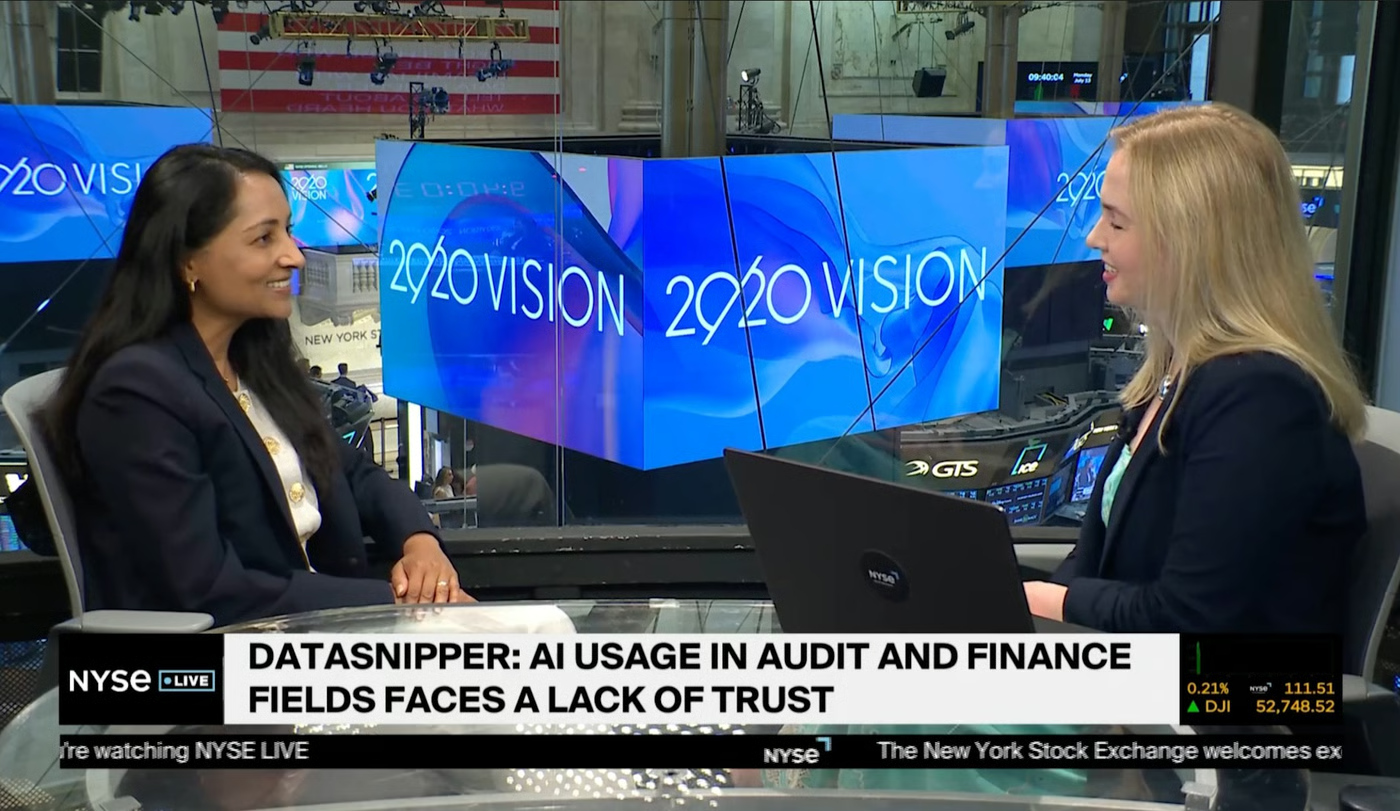
Audit and finance leaders spent the last year pushing AI into their teams. The people actually running those tools every day now trust AI less than they did twelve months ago. That is not a contradiction, and the reason it is happening tells you almost everything about where this profession is headed.
The first question was direct: what problem does DataSnipper solve?
Her answer: the verification gap.
Fewer auditors, more to verify
Every year, the demands on audit and finance professionals grow. Regulatory standards tighten and reporting requirements expand.
And fewer people are choosing the profession to meet them.
"When was the last time you heard of someone graduating with a degree in accounting?".
Burnout is pushing experienced people out faster than new graduates come in. The ones who stay absorb more work with less support.
More to check, fewer people to check it. That is the verification gap in one line.
"This entire world runs on trust. We trust a lot of the numbers we see today because there's an army of auditors behind the scenes."
Every figure on every balance sheet and income statement earns its place because someone with the right expertise stood behind it. Shrink the group doing that verifying while the workload keeps climbing, and the math stops working.
Trust in AI fell to 55%, and who lost faith matters more than the number
The drop wasn't even across the profession. Individual contributors, the people running AI tools day to day, trust it less than the partners and managers setting strategy above them.
"We're seeing a huge gap, and a widening gap, between the aspirations that management has for AI and the reality of people using it day to day."
Her read on why is straightforward. There is distance between what AI promises and what it delivers. People expect AI to be fast, accurate, and intelligent, and the reality is that it makes mistakes.
"Just because an answer is given in a nanosecond doesn't mean it's always accurate."
For an auditor that is not a footnote. It is the job. Knowing how a number was reached matters as much as knowing what the number says.
So the trust drop is not auditors rejecting AI, it is auditors understanding how and what it works for. The people who understand the work best are the first to notice where the tools fall short, and their skepticism is a feature of good judgment.
Access isn't adoption
Speed is not the same as trust. Peters made the point that AI has to embed evidence into every output, so an auditor can see how a result was reached instead of taking it on faith. But evidence only helps if the AI is in the workflow to begin with.
Leadership keeps imploring teams to use AI, but only 13% of audit professionals have it embedded in their actual workflows. The problem is what the other 87% are doing with the tools they were handed.
"Mostly what they're using AI for are surface level Q&A questions back and forth, but they're not fundamentally changing how the work is done."
A chatbot on the side of the desk answers questions. It does not touch the testing, the verification, the weekend-eating work that AI was supposed to take off their plates.
"Unless AI is embedded in those workflows, you're not really going to create the efficacy of change.”
Evidence attached, not assumed
"The key for audit professionals is how do you embed evidence and trust into every output, so that they know how the AI arrived at those results.”
Closing the verification gap means AI output has to arrive with a traceable path back to the source document. Not a claim an auditor takes on faith. Something they can check. That's also the case for keeping humans at judgment points instead of automating past them. Agents can take the volume: extraction, matching, the first pass through a document. The auditor still signs the opinion, and still owns the verdict behind it.
Before rolling AI into a workflow, Vidya points to three questions worth asking internally:
- Where does this output's evidence live, and can someone trace it back in one step?
- Is this tool doing the work, or just answering questions about the work?
- Who reviews the result, and does the workflow actually give them time to?
Firms that can answer all three tend to show up in the 13%. Everyone else is still at the Q&A stage.
Where this leaves the profession
Peters closed the conversation where she opened it, on trust. The verification gap does not get smaller because AI got faster. It gets smaller when the work AI does can be checked, when evidence travels with every output, and when the people signing the opinion still own the judgment behind it. The firms pulling ahead are not the ones adopting AI fastest. They are the ones adopting it in a way their own teams can stand behind.
AI Report for Audit and Finance 2026
The trust drop and the 13% adoption figure are two data points from a much longer picture. DataSnipper's 2026 AI Report breaks down where trust is highest and lowest by role, what firms with embedded AI are doing differently from firms stuck at the Q&A stage, and where the profession goes from here.

.svg?width=600&quality=70&format=auto&crop=16%3A9)